Are Volleyball Private Lessons Worth It? | Parent Guide
Apr 30, 2026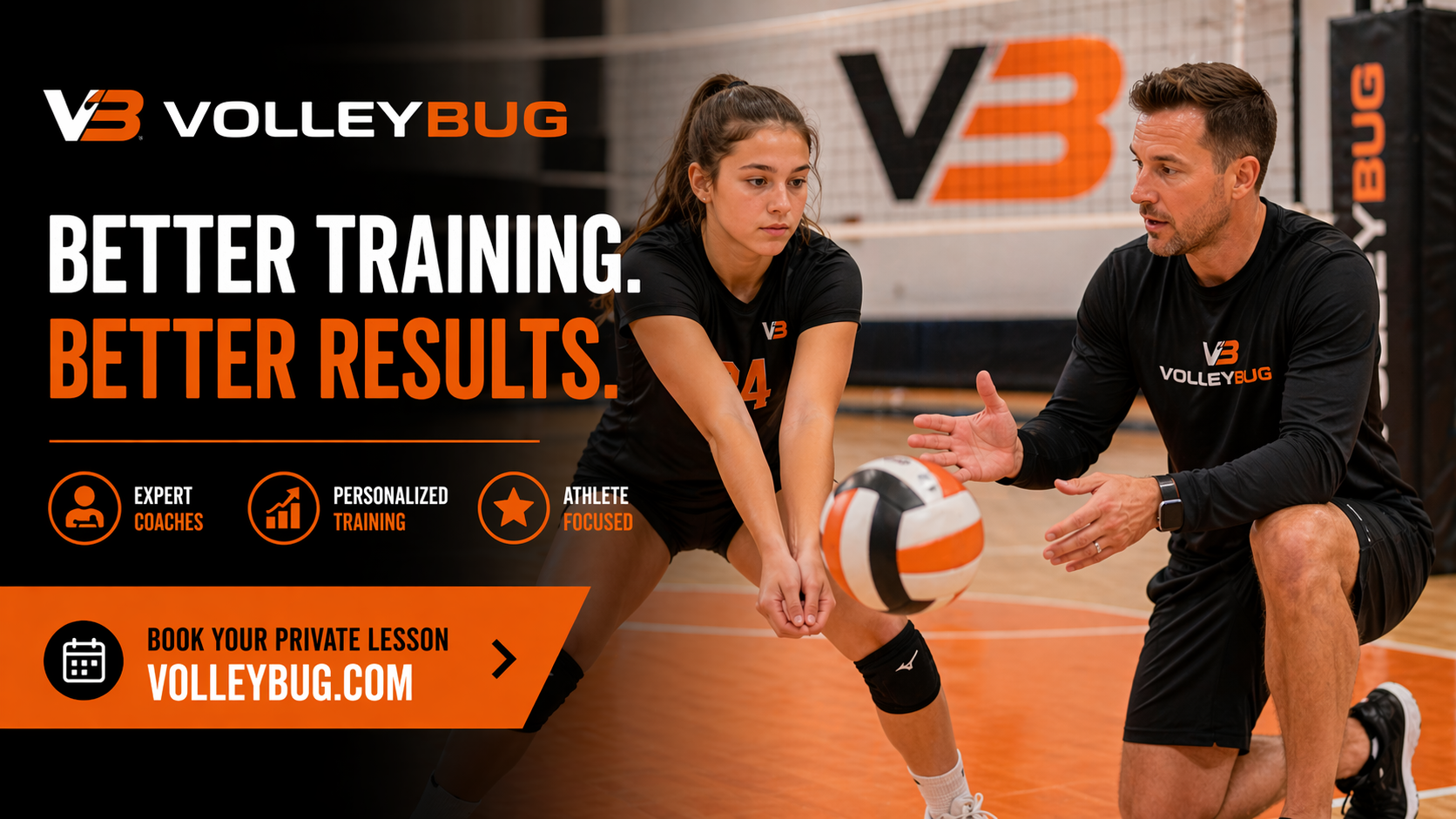
Are Volleyball Private Lessons Worth It? A Parent’s Complete Guide
If you are a volleyball parent, you have probably asked yourself this question:
“Are private lessons actually worth the money?”
It is a fair question.
Between club fees, tournament travel, uniforms, camps, and extra training opportunities, volleyball can become expensive very quickly.
So when someone suggests private lessons, many parents wonder if it is truly necessary or just another added cost.
The short answer?
Yes, private lessons are worth it when they solve the right problem.
The key is understanding when private lessons help, when they do not, and how to choose the right type of training for your athlete.
Let’s break it down.
Quick Answer: Are Volleyball Private Lessons Worth It?
Private lessons are worth it when athletes need position-specific development that team practice cannot provide.
They are especially valuable for:
- Setters needing handwork and decision training
- Hitters needing arm swing correction and attacking efficiency
- Liberos improving serve-receive, and defensive reads
- Younger athletes building strong fundamentals
- Players preparing for tryouts
- Athletes working toward college recruiting goals
Private lessons are not magic.
They are focused reps.
And focused reps create faster results.
Frequently Asked Questions
They serve different purposes. Camps are great for volume and exposure. Clinics develop game-like skills and court awareness. Private lessons are best for correction and position-specific development. It depends on maturity and motivation. Many athletes benefit between ages 11–14, but readiness matters more than age. Most sessions work best at 60–90 minutes, depending on focus and age. They care about skill level, not how you got there. Private lessons help athletes perform better, and performance is what gets noticed.Are private lessons better than camps and clinics?
At what age should athletes start private lessons?
How long should a private lesson be?
Do college coaches care about private lessons?
Why Team Practice Alone Is Often Not Enough
Club practices are important. But team practice is designed for team development, not individual correction.
That means coaches are focused on:
- Team systems
- Rotations
- Serve receive patterns
- Offensive timing
- Defensive structure
- Match preparation
They are not always able to spend 30 minutes fixing one athlete’s footwork or hand positioning.
That is where private lessons become valuable.
Private lessons create:
- Focused correction
- Immediate feedback
- Position-specific development
- Repetition without distraction
Athletes improve faster when someone is coaching their exact problem. Not just running the whole team.
Signs Your Athlete May Need Private Lessons
Sometimes the answer is obvious. Sometimes it is not. Here are strong signs private training may help:
They are stuck at the same skill level
If improvement has stalled, focused coaching often breaks the plateau.
They struggle with confidence
Confidence often improves when athletes feel prepared. Preparation creates confidence.
They are preparing for tryouts
Pre-tryout season is not the time to hope. It is time to prepare.
They want a specific position
Setters, liberos, middles, and pin hitters all require specialized development.
They want college recruiting opportunities
Higher-level recruiting demands cleaner skills and stronger consistency.
They love the game and want more reps
Motivated athletes benefit most. Effort multiplies coaching.
What Private Lessons Actually Improve
Private lessons are not just “extra touches.”
Good private lessons target:
Technique
Footwork, platform angle, hand position, and arm swing mechanics.
Decision Making
Setters reading blockers.
Liberos reading hitters.
Hitters recognizing seams.
Court Awareness
Knowing where to be before the ball arrives.
Confidence
Prepared athletes compete differently.
Volleyball IQ
Understanding the game changes performance. Not just physical skill. This is why quality coaching matters. Private lessons should teach athletes how to think, not just how to drill.
Setter Training vs Hitter Training
Parents often ask:
“Which should we focus on first?”
The answer depends on the athlete and the position played. They may need neither of the two and need to focus on passing and serve-receive.
Setter Training
Best for athletes who need:
- Cleaner hand contact
- Faster release
- Better location consistency
- Tempo control
- Decision making
- Leadership development
Hitter Training
Best for athletes who need:
- Better footwork
- Arm swing efficiency
- Shot selection
- Timing improvement
- Blocking technique
- Transition speed
Neither is “better.” The right answer is the skill gap. Train the weakness first. That creates the fastest growth.
How Often Should Athletes Take Private Lessons?
This is where many families overthink. You do not need private lessons every week forever. Consistency matters more than frequency.
A strong starting point is:
2 focused sessions per month
This creates:
- Skill correction
- Time to apply changes in practice
- Sustainable improvement
- Budget-friendly development
Six sessions over three months with purpose beats six random lessons in one week.
Development is not intensity, Development is consistency.
What Makes a Private Lesson Actually Valuable?
Not all lessons are equal. A good private lesson should include:
Clear correction
The coach should be able to identify exactly what needs improvement and communicate their plan for addressing it.
Specific goals
Every session should have a purpose. Avoid sessions that just keep your athlete busy rather than address specific skill deficiencies.
Measurable progress
Athletes should know what is improving. After each session, your athlete should be able to tell you what they worked on and what they will focus on at their next team-level practice.
Position-specific teaching
General reps are not enough. Make sure your player is being taught the correct mechanics for their skill. They should also be taught Where to be, What to look for, What to do, and When to do it.
Confidence building
Athletes should leave better than they arrived. If a lesson feels like random drills with no coaching, it is not a private lesson. It is just expensive cardio.
Questions Parents Should Ask Before Booking
Before investing, ask:
What position does this coach specialize in?
Experience matters. There are specific skills coaches, game-play coaches, and mindset coaches. Some coaches can do all of these things, but are much better at one or two things.
What age groups do they train most?
Coaching 12U and coaching 18 Open are very different. You need a coach that has a skillset specific to your player's age and needs.
What does a session usually focus on?
Clarity matters. Does your coach have a plan for your training session, or are they just winging it with repetitive drills?
How is progress measured?
Results should be visible with 2-3 sessions, but mastery will take time. Take notes on the success rate at the start, then track the skill's success as your athlete trains.
What happens after the lesson?
The best coaches give athletes things to work on between sessions.
The Biggest Mistake Parents Make
The biggest mistake?
Using private lessons as a panic button.
Parents often wait until:
- Tryouts are next week
- Playing time disappears
- Confidence crashes
- Recruiting deadlines arrive
Then they rush for help.
Private lessons work best as development, not emergency repair.
The best results happen when families stay proactive.
Not reactive.
Final Thoughts
Private lessons are not required for every athlete.
But for many players, they become the difference between staying stuck and making real progress.
The goal is not just more volleyball.
The goal is better volleyball.
Better movement.
Better decisions.
Better confidence.
Better opportunities.
That is what private lessons should create.
When training is intentional, the investment becomes easy to justify.
Because growth is always worth it.
Book a Private Lesson with VolleyBug
If your athlete is ready for focused, position-specific development, we would love to help.
VolleyBug private lessons are designed to give athletes the reps, coaching, and confidence they cannot always get in team practice.
We focus on:
- Setters
- Liberos
- Hitters
- Serve receive
- Defensive systems
- Volleyball IQ
- Confidence and court awareness
Because first contact wins.
And development should never be left to chance.
Book your private lesson today and help your athlete train with purpose.
Stay connected with everything happening at VolleyBug.
Join our SMS Text and Email Alerts to get first access to private lesson openings, clinic registrations, camps, recruiting tips, training opportunities, and important volleyball updates before spots fill up.
Parents stay informed, players stay prepared, and coaches stay connected with valuable training insights, event announcements, and exclusive resources designed to help athletes grow on and off the court.
Click below to join the VolleyBug community and stay one step ahead.